A Columbus bathroom remodel usually stalls for one reason, too many ideas and no way to choose. You save photos, you like a dozen styles, and none of them answer the real questions, what holds up, what fits your home, and what you can actually build on a schedule.
We use a simple filter that works well in Central Ohio. Think like a scenic fair judge. A bathroom wins on three things, craftsmanship, function, and a finish that still looks good after a hard season. That mindset is your ohio id for decision-making, it keeps you from paying for details you will not enjoy and missing the upgrades you will feel every day.
This guide turns fairground inspiration into a buildable plan for bathroom remodeling in Columbus, Ohio. You will get a practical style framework, material picks that make sense for our climate, a worked example, and the key trade-offs we see homeowners miss.
Ohio Id: How to Turn "Fair Inspiration" Into a Buildable Bathroom Plan
Fair inspiration is useful because it is grounded in real materials. You see wood, metal, tile, stone, lighting, and color next to each other in daylight, not under a showroom spotlight.
The mistake is copying a look without copying the logic behind it. Fair builds are designed to be cleaned fast, used hard, and noticed from a distance. A bathroom needs the same approach, but in a smaller footprint, with more moisture, and with tighter code requirements.
We recommend choosing one "hero" element, then supporting it with quiet, durable finishes.
- One hero element, a tile wall, a vanity, a mirror, or statement lighting.
- Two supporting finishes, flooring and paint, or flooring and wall tile.
- One durable, easy-clean decision, shower glass treatment, grout choice, or ventilation.
That last item is where most bathroom budgets are won or lost. Style is visible, maintenance is forever.
The Fair-Inspired Bathroom Style Map (Pick One Lane)
To keep decisions moving, we organize "Ohio scenic fair" inspiration into four lanes. Each has a clear material palette, so you can shop and compare without spinning.
#### 1) Heritage Craftsman (Warm, Honest Materials)
Best for older Columbus neighborhoods like Clintonville, Bexley, Grandview Heights, and Upper Arlington where trim details and proportions matter.
- Colors: warm whites, clay, muted greens, deep navy accents
- Materials: wood vanity with real drawer boxes, matte black or brushed nickel hardware, classic subway tile with a twist (size, layout, or edge detail)
- Lighting: simple sconce pairs, warm temperature LEDs
Trade-off to know: warm finishes look rich, but they show inconsistent lighting fast. Plan lighting early so the room does not feel yellow in the morning and gray at night.
#### 2) Clean Modern (High Contrast, Fewer Lines)
Best for condos, newer builds, and homes in Dublin, Hilliard, Westerville, and New Albany where flatter trim and open plans are common.
- Colors: crisp white, charcoal, black accents, natural oak as a softener
- Materials: large-format porcelain, frameless or semi-frameless glass, integrated niches, minimal grout joints
- Lighting: layered, recessed plus mirror lighting
Trade-off to know: "minimal" is not cheaper. It often requires flatter walls, cleaner tile layout, and more precise finish work.
#### 3) Rustic Utility (Barn-Style, But Make It Bathroom-Smart)
Best for mudroom-adjacent powder rooms, basement bathrooms, and busy family baths.
- Colors: earthy neutrals, iron, weathered wood tones
- Materials: textured porcelain that reads like stone or wood, darker grout for practical cleaning, solid surface vanity top
- Fixtures: strong lever handles, simple shapes
Trade-off to know: real reclaimed wood and raw steel can be high maintenance in a wet room. You can get the look with porcelain and sealed finishes that behave better.
#### 4) Bright Midway (Color and Pattern Without Regret)
Best for powder rooms and guest baths where you can be bold without living in it every day.
- Colors: one saturated color (teal, emerald, terracotta) plus white and metal
- Materials: patterned floor tile, simple wall tile, statement mirror
- Details: one playful element, but not five
Trade-off to know: patterned tile is unforgiving. If the room is out of square, the pattern will show it. That does not mean you cannot use it, it means you plan layout and prep carefully.
What Holds up in Columbus Bathrooms (Moisture, Cleaning, and Real-Life Use)
Central Ohio bathrooms take a beating. We see temperature swings, winter dryness followed by heavy spring and summer humidity, and daily condensation from showers.

That is why we steer clients toward finishes that manage moisture first, then look good.
Start with the Wet Zone and Work Out
If you upgrade one area, upgrade what gets wet.
- Shower or tub surround, waterproofing approach, and wall substrate
- Floor, slip resistance, and transitions
- Ventilation and where the moisture goes
A bathroom can have premium tile and still fail if water gets behind it. Your tile is not the waterproofing. The waterproofing is the waterproofing.
For readers who want a baseline on code-adjacent safety items like GFCI protection in bathrooms, the National Electrical Code requires GFCI protection for bathroom receptacles in dwelling units. The NEC itself is a paid standard, but the requirement is widely summarized by electrical safety authorities like the Electrical Safety Foundation International GFCI guidance. A licensed contractor and electrician will confirm what applies in your specific layout.
Material Choices with the Best "Fair Test" Score
We see these perform well for Columbus-area homes because they are durable, cleanable, and repairable.
Flooring
- Porcelain tile with a slip-resistant finish for family baths and primary suites
- Larger tiles when you want fewer grout joints, smaller tiles when you need more traction
Shower Walls
- Porcelain or ceramic tile on a proper waterproofing system
- Solid surface panels when you want fewer seams and faster cleaning (good for busy households and some commercial restrooms)
Countertops
- Quartz for consistent look and easy maintenance
- Granite if you prefer natural variation and you are comfortable with periodic sealing
Grout and Caulk Choices That Reduce Maintenance
- Epoxy grout can be a strong choice in wet areas for stain resistance, but it is more demanding to install and repair.
- Cement grout is common and cost-effective, but it needs sealing and it will discolor faster in heavy-use showers.
We walk through these trade-offs during the on-site measurement so you are not choosing blindly.
Ventilation Is Not Optional in a Remodel
Many "nice" bathrooms fail because the fan is undersized, routed poorly, or not used.
A good rule is to size and place ventilation for the shower you actually use, not the old layout. The Home Ventilating Institute publishes guidance on bath fan selection and installation that is worth reading before you buy fixtures: HVI bathroom ventilation basics.
If you have persistent condensation on mirrors and windows, mildew on caulk lines, or peeling paint near the ceiling, ventilation and moisture control should be part of your scope.
A Worked Example: Turning Fair Inspiration Into a Real Columbus Bathroom Scope
Here is how we convert inspiration into a quoteable plan without turning the project into an endless design phase.
Scenario: a Hall Bath in a 1990S Home Near Hilliard
The homeowner wants "fresh, brighter, and easier to clean." They like the fair look of white tile, warm wood, and black accents, but they do not want a trendy room that dates fast.
Constraints we see often in this type of Columbus home
- Standard 60-inch tub alcove
- Limited natural light
- Builder-grade vanity and mirror
- Flooring that runs under the vanity, making replacement a little more involved
Step 1: Choose the Lane and the Hero Element
They pick Heritage Craftsman as the lane.
Hero element: a warm wood vanity with a furniture feel (but with bathroom-safe finishes).
Step 2: Lock the "Quiet" Finishes
To keep the room calm, we standardize the rest.
- Shower walls: classic white tile, stacked or offset, with a clean edge profile
- Floor: light gray porcelain with texture for traction
- Paint: warm white that does not go pink under LED lighting
This is how you get the fair-inspired warmth without turning the bathroom into a theme.
Step 3: Spend Where You Touch, Save Where You Don't
We map the budget to daily use.
Spend:
- Vanity drawers and hardware (you use them every day)
- Shower valve and trim (feel and reliability)
- Lighting and mirror (how you look in the room)
Save:
- Decorative niches beyond one functional niche
- High-maintenance finishes like unsealed stone in the shower
- Overly complex tile patterns in a small hall bath
Step 4: Decide the Two Big Trade-Offs up Front
These two decisions change timeline and cost more than most people expect.
- Keep the tub location or move plumbing.
Keeping the tub where it is typically keeps scope tighter. Moving plumbing can be worth it, but it introduces more demolition, more coordination, and more inspection points.
- Go with a shower curtain or glass.
Glass looks sharp and feels premium, but it adds cost and requires more cleaning. A high-quality curtain and rod can be practical, especially for kids or dogs.
Step 5: Write the Scope Like a Builder, Not Like a Mood Board
A buildable scope reads like this:
- Demo: remove tub surround, vanity, flooring, base
- Rough work: adjust plumbing as needed, electrical for lighting and fan, framing repairs
- Waterproofing: shower/tub surround waterproofing system, flood or water test as applicable
- Tile: wall tile in wet zone, floor tile, grout type specified
- Trim: paint, base, door casing touch-ups
- Fixtures: vanity, top, faucet, toilet, fan, lighting, mirror
- Final: silicone, punch list, final clean
That level of clarity protects you from surprises and helps you compare quotes fairly.
If you want a deeper contractor-focused checklist for this step, review our local guidance on bathroom remodeling in Columbus planning.
Budget, Timeline, and DIY vs. Hire: a Decision Framework That Avoids Regret
Most homeowners searching for inspiration also want to know what it will cost, how long it will take, and what they can do themselves.
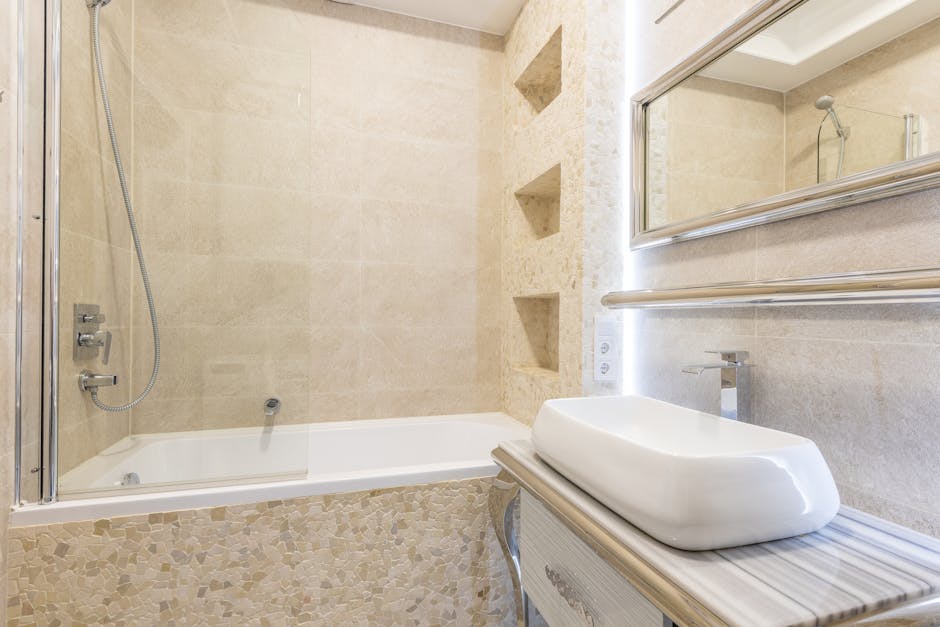
We cannot quote a price without a walk-through, but we can give you a decision framework that keeps your remodel aligned with your goals.
Choose a Refresh, a Mid-Level Remodel, or a Full Rebuild
Choose a refresh if
- Layout works
- No signs of moisture damage
- You mainly want better paint, lighting, and fixtures
Typical scope: paint, vanity swap, mirror and lights, toilet, minor trim, possibly floor if it is straightforward.
Choose a mid-level remodel if
- You want new flooring and a new wet-zone finish
- You need better storage
- You want to improve ventilation or lighting
Typical scope: demo, new floor, new tub surround or shower walls, new vanity, lighting, fan.
Choose a full rebuild if
- You have water damage, soft subfloor, persistent mold, or failing tile
- You want to move plumbing, resize the shower, or reframe the room
- The bathroom is part of a larger plan, whole-home remodel, addition, basement finish
Typical scope: down to studs in sections, more rough work, higher inspection and coordination needs.
A full rebuild can be the most cost-effective long-term choice if you are already opening walls due to moisture issues.
Timeline Reality in Columbus and Central Ohio
Bathroom projects are compact, but they are dense. Multiple trades touch the same small room, and a delay in one step can hold the next.
In our Columbus work, timeline is usually driven by:
- Permit and inspection requirements for plumbing and electrical changes
- Special-order materials, vanity lead times, tile availability
- Discovery conditions, subfloor damage, out-of-plumb walls, hidden leaks
The practical way to protect your schedule is to finalize fixtures and tile selections before demolition and confirm what is in stock.
What You Can DIY Without Putting the Build at Risk
Some tasks are safer for DIY than others.
Reasonable DIY options for many homeowners:
- Painting after proper prep and dry time
- Hardware swaps (towel bars, toilet paper holder)
- Mirror replacement if electrical work is not involved
Items we recommend leaving to licensed pros:
- Any plumbing rework, valve changes, or drain moves
- Electrical changes, fan wiring, new circuits, GFCI placement
- Waterproofing systems and tile in wet zones
A bathroom is not the place to learn waterproofing. If water gets behind the finish, the failure often shows up months later, and the repair is usually a partial rebuild.
If you are comparing contractors, our team laid out what to look for in tips from Columbus bathroom renovation contractors.
Common Mistakes We See in Columbus Bathrooms (and the Simple Fixes)
Most remodel regrets are not about style. They are about function.
These are the problems we see repeatedly in Columbus, Dublin, Worthington, and the surrounding areas, along with the fix we recommend.
Mistake 1: Choosing Tile Before Confirming the Room Is Flat and Square
Many homes are not perfectly square, especially older ones. Large-format tile and bold patterns amplify that.
Fix: confirm wall flatness and layout plan before ordering tile. If the walls need prep, include it in the scope and schedule.
Mistake 2: Under-Lighting the Vanity Area
A bright ceiling light does not replace face lighting.
Fix: plan lighting around the mirror. Sconces or an integrated mirror light make grooming easier and reduce shadows.
Mistake 3: Prioritizing Looks Over Cleaning
Matte black fixtures can spot, light grout can stain, and frameless glass shows every droplet.
Fix: match finish to your habits. If you do not want to squeegee glass, consider glass treatments, a framed panel, or a curtain. If you have hard water, select finishes that hide spotting better.
Mistake 4: Skipping Storage Planning
A new vanity is not automatically better storage. Drawer layout matters.
Fix: plan storage for what you actually keep in the room, hair tools, makeup, medications (stored safely), towels, cleaning supplies.
Mistake 5: Not Planning for the "During Construction" Phase
A single bathroom home needs a different plan than a three-bath home.
Fix: set expectations and sequencing. If you need the room back quickly, choose materials and a scope that support a shorter timeline.
FAQ
Can I Use Fair-Style Wood and Metal in a Wet Bathroom?
Yes, but pick bathroom-safe versions. We often use wood vanities with durable finishes and moisture-resistant construction details, and metal accents that are meant for bathrooms. Raw steel and untreated wood are high-maintenance in a shower zone.

Do I Need a Permit for a Bathroom Remodel in Columbus?
It depends on scope. Cosmetic changes often do not require permits, but plumbing and electrical changes commonly do. We review the scope during the walk-through and help you understand what needs permitting and inspection for your specific project.
What Is the Fastest Way to Modernize a Bathroom Without a Full Remodel?
Focus on the items that change the feel immediately, lighting at the mirror, a new vanity and top, updated fixtures, and a clean, durable floor. A coordinated finish plan usually beats a long list of small upgrades.
How Do I Keep My Remodel From Turning Into a Bigger Project?
Lock the scope early. Keep the layout if it is functional, confirm fixture sizes before ordering, and plan for what is behind the walls. The best way to control scope is a detailed on-site measurement and a written quote that spells out what is included.
Ready to Build a Bathroom That Looks Good and Works Hard
Fair inspiration is fun, but your bathroom needs to perform on a normal Tuesday. Our job is to translate the look you like into a clear scope, a realistic timeline, and finishes that hold up in Columbus and Central Ohio.
Call Christopher Construction at (614) 905-4521 or request a free walk-through. We serve Columbus, Dublin, Powell, Upper Arlington, Worthington, Bexley, Grandview Heights, Hilliard, Westerville, and nearby areas.
Topics
- ohio id